

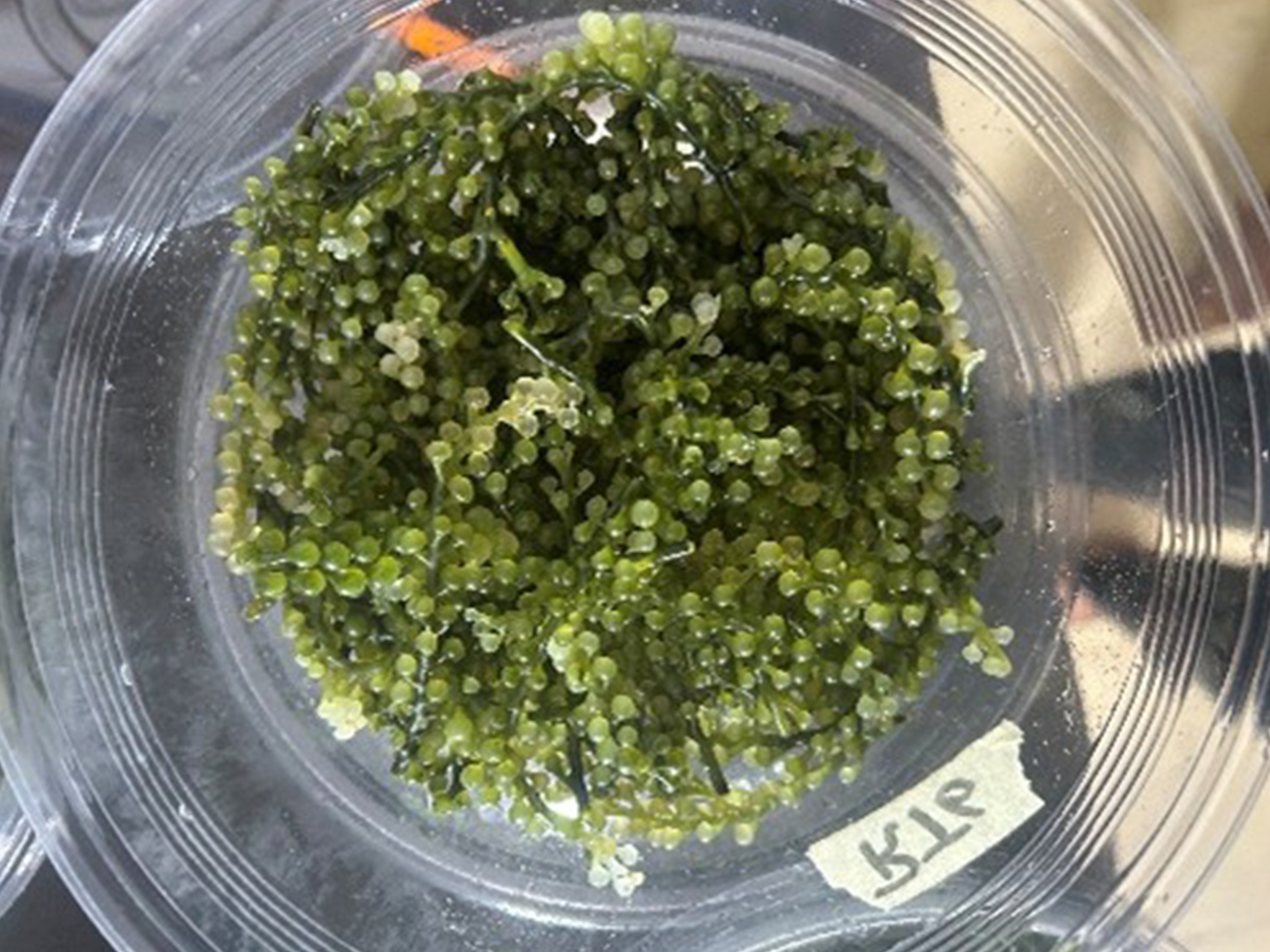
Caulerpa racemosa, commonly known as sea grapes or green caviar, is becoming increasingly popular as both a culinary delicacy and a functional food thanks to its nutritional and health benefits. But one key question remains:
How do you keep it fresh after harvest?
To find out, we conducted a simple 5-day shelf-life experiment comparing two storage methods: room temperature and refrigeration.
How the Experiment Worked
Fresh samples were collected and rinsed with seawater before being divided into two groups:
- Pre-processed samples: Healthy branches were selected, trimmed (≥3 cm), and kept in aerated seawater with fertilizer for five days
- Unprocessed samples: No pre-treatment applied
All samples were then:
- Drained and air-dried for 10 minutes
- Stored either at room temperature (25°C) or under refrigeration
Each day, we evaluated:
- Weight
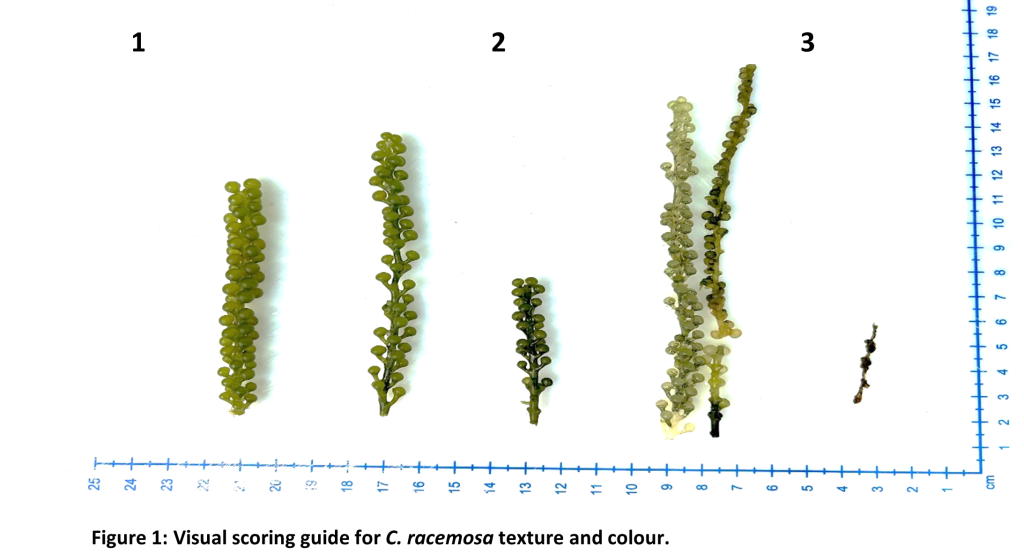
- Texture
- Colour
- Smell
- Taste
Samples were scored from 1 (fresh) to 5 (spoiled).
Key Results
The results were clear:
Room Temperature (Best Performance)
- Pre-processed samples stayed fresh for 1–2 days
By Day 3: slight softening, mild sour smell, fading colour
- By Days 4–5: mushy and spoiled
Unprocessed samples deteriorated much faster, becoming slimy within 24 hours.
Refrigeration (Worst Performance)
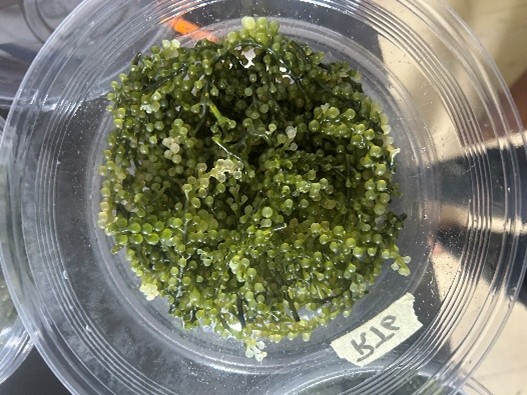
- Rapid decline within Day 1
- Severe softening, waterlogging, and foul odours
- Both sample types spoiled quickly
What This Means
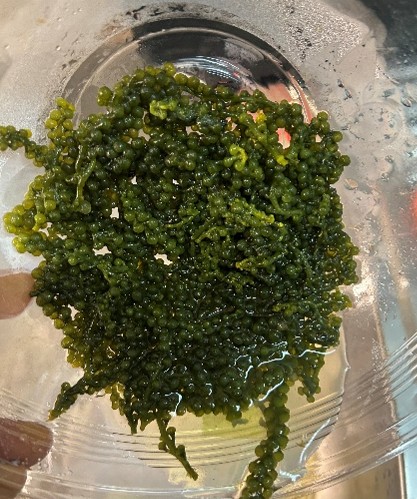
- Room temperature is the best short-term storage option (up to 2–3 days)
- Refrigeration should be avoided under these conditions
- Pre-processing helps extend shelf life, likely by maintaining metabolic activity
Practical Recommendations
If you’re storing Caulerpa racemosa:
- Keep at room temperature
- Monitor daily for spoilage
- Avoid refrigeration
Future Improvements
Further research could explore:
- Alternative pre-processing methods (drying, bleaching, draining)
- Lower storage temperatures (<25°C)
- Better airflow (perforated containers)
- Reducing moisture buildup with mesh layers