

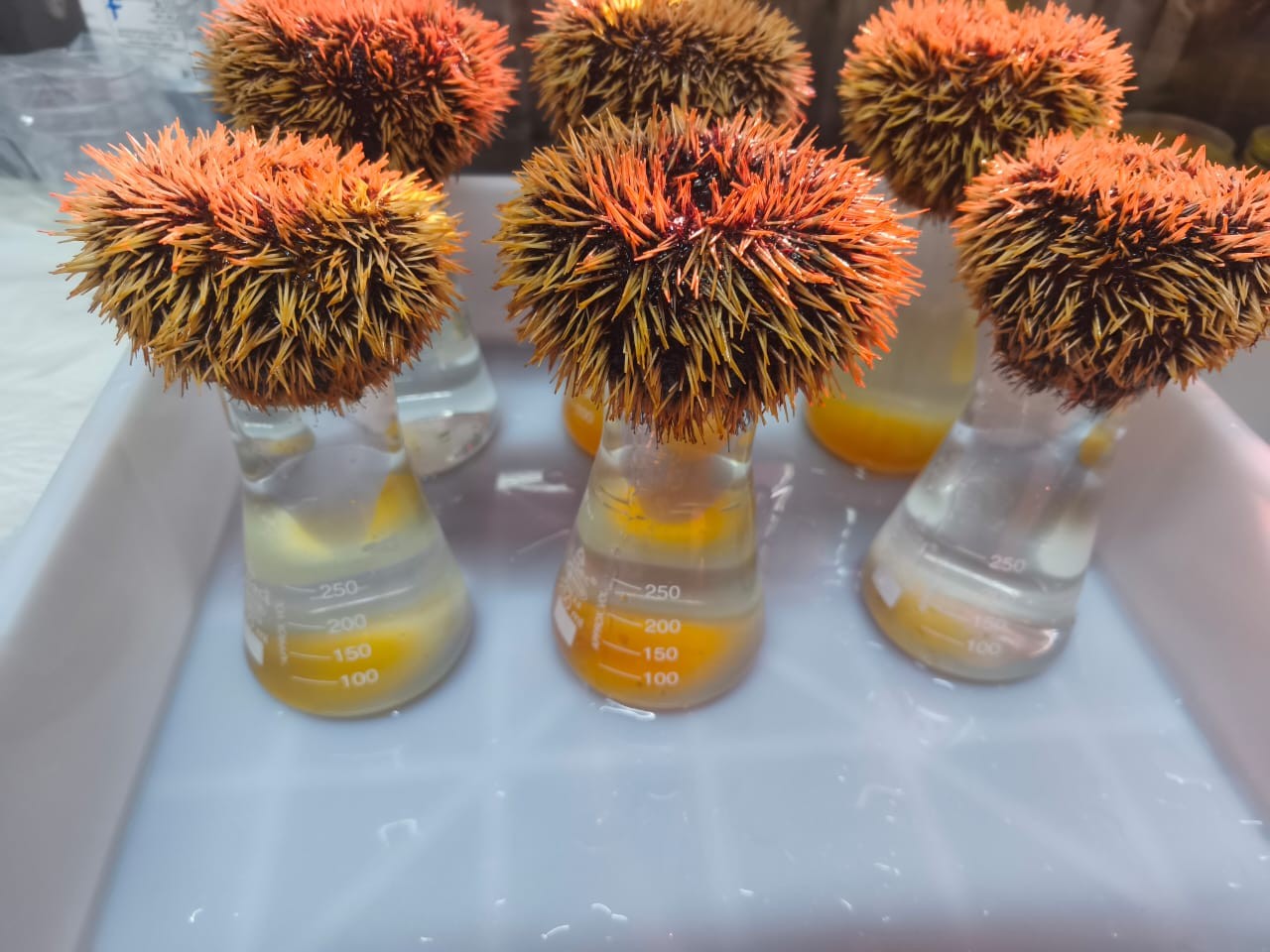
The Aquaculture Research Team is continuously exploring ways to improve the hatchery success of Tripneustes gratilla, commonly known as the collector urchin. This ecologically and economically important species has great potential for aquaculture, but raising its larvae is a delicate process. High mortality, sometimes over 90% in the first week has been a major challenge in past rearing attempts.
To address this, we recently carried out an experiment testing how different aeration levels (water movement) and cleaning frequencies affect larval survival and growth. The goal was simple: find the balance that keeps water quality high without stressing or damaging the fragile larvae.
The Experiment
Between March and May 2025, the Aquaculture Research Team reared larvae under nine different treatment combinations of aeration (low, medium, high) and cleaning schedules (low, moderate, frequent). Larvae were carefully fed a microalgae diet, and their survival and development were monitored over 39 days until they were ready to settle.
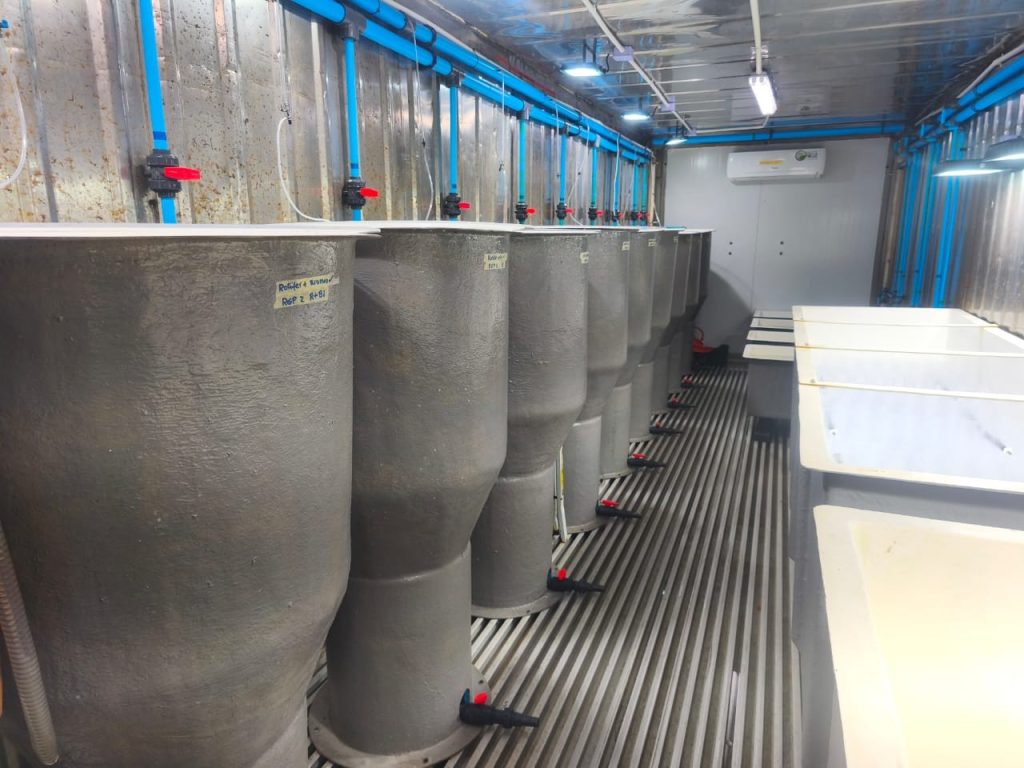
Larval rearing cones at the hatchery, where different aeration and cleaning treatments were tested on Tripneustes gratilla larvae
Key Findings
The results were clear:
- Medium Aeration + Moderate Cleaning gave the best outcomes, with the highest survival and steady growth. This balance kept food particles suspended, oxygen levels stable, and minimized stress on larvae.
- Low Aeration consistently led to poor survival, mainly due to poor water circulation and waste buildup.
- High Aeration with Frequent Cleaning improved water quality but caused physical stress and mechanical damage to larvae, lowering survival rates.
In short, larvae did best when water flow was strong enough to support feeding and oxygen supply, but not so strong that it created turbulence. Similarly, cleaning every five days helped maintain hygiene without disrupting the larvae too often.
Why It Matters
Optimizing hatchery techniques is essential if Seychelles is to build a sustainable sea urchin aquaculture sector. By refining rearing protocols, we can improve survival rates, support future commercial production, and reduce pressure on wild sea urchin populations.
Next Steps
Healthy juvenile Tripneustes gratilla produced under optimized hatchery conditions.
Based on this study, the Aquaculture Research Team recommends adopting Medium Aeration (about 1l/min) with Moderate Cleaning as a standard protocol for Tripneustes gratilla larval rearing. This simple yet effective adjustment brings us closer to scaling up echinoid aquaculture in the country.